
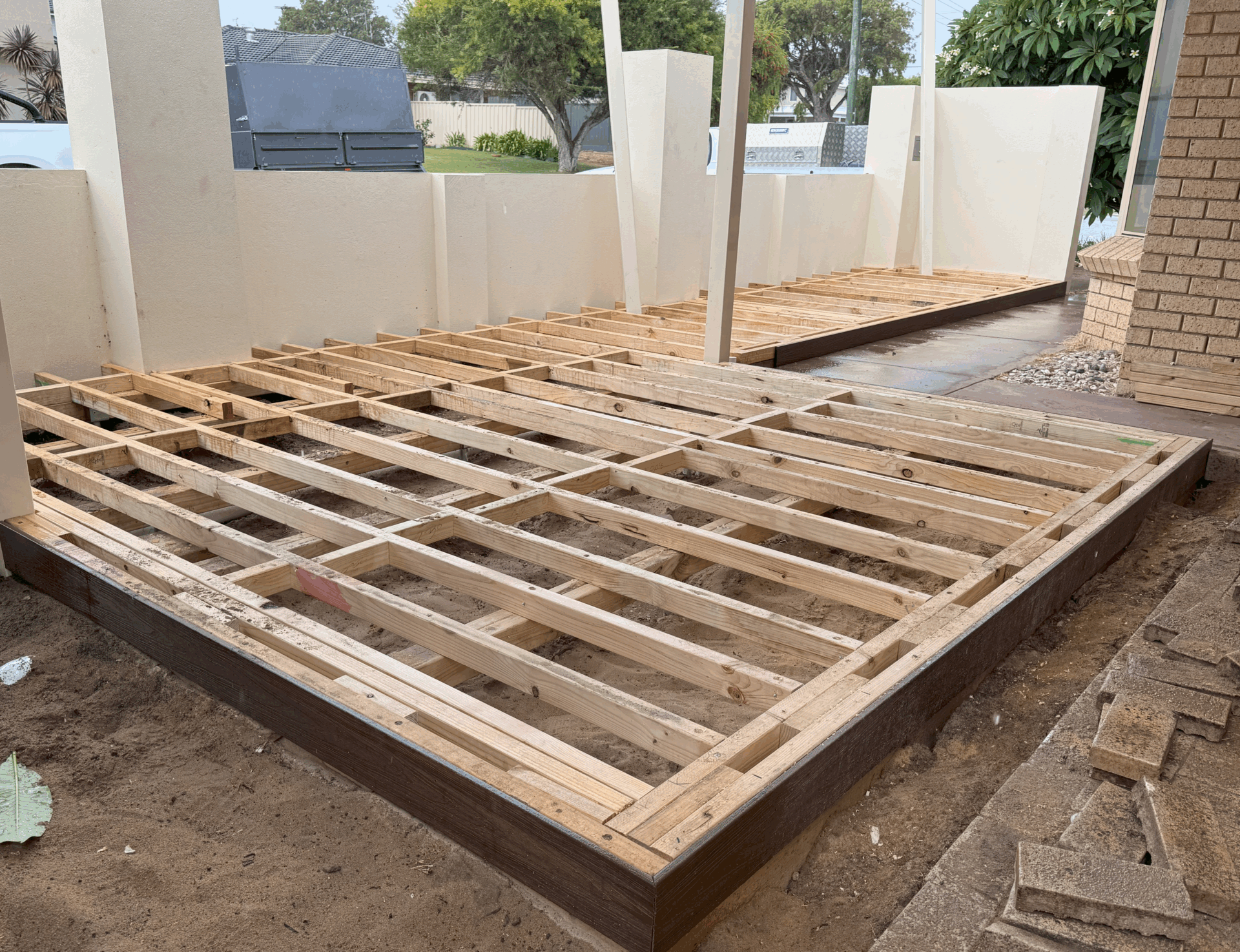
When building a deck, one of the most important yet overlooked decisions happens before composite boards are laid. The choice of subframe material directly affects how long your deck lasts, how well it performs and how safe it is over time. For homes across WA, especially in coastal suburbs like Safety Bay and Port Kennedy, treated pine decking frames are the industry standard for good reason.
Let’s explore why this specific material has become the go-to choice for composite decking substructures. We’ll also go into what you need to consider before starting your next decking project.
Understanding Treated Pine Decking: What Is It?
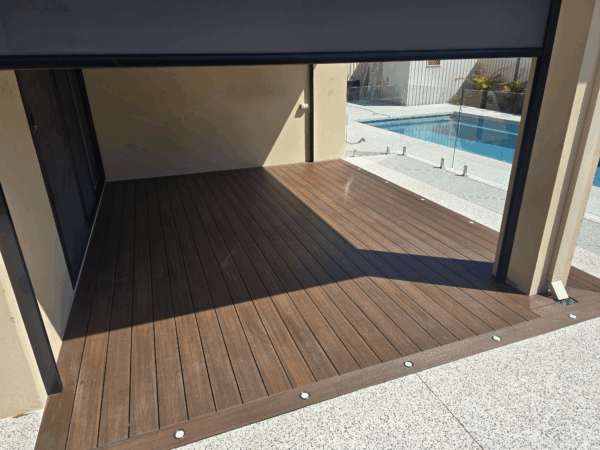
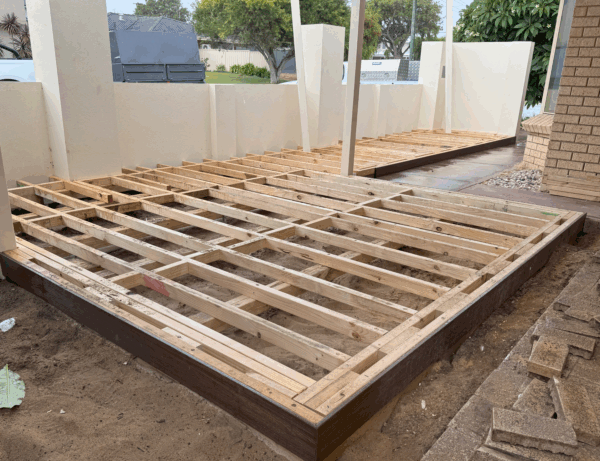
Treated pine decking refers to pine timber that has undergone pressure treatment with preservatives. These treatments help protect the wood against termite attack, fungal decay and rot, making it highly suitable for outdoor use.
In Perth, decking frames exposed to the elements should be constructed with at least H3-rated treated pine. H3 treatment is specifically designed for timber used above ground and exposed to the weather, perfect for deck subframes supporting composite boards.
Some key benefits of using treated pine for decking frames include:
Durability in WA conditions: Treated pine withstands high UV, humidity and coastal air when properly maintained.
Cost-effectiveness: It offers excellent value for performance, especially when compared to hardwood or steel options.
Workability: It’s easier to cut and screw, allowing for more precise installations.
Availability: Readily available across Perth and regional WA.
You can view examples of treated pine subframes under finished decks in our composite decking gallery.
Why Composite Decking Needs the Right Subframe
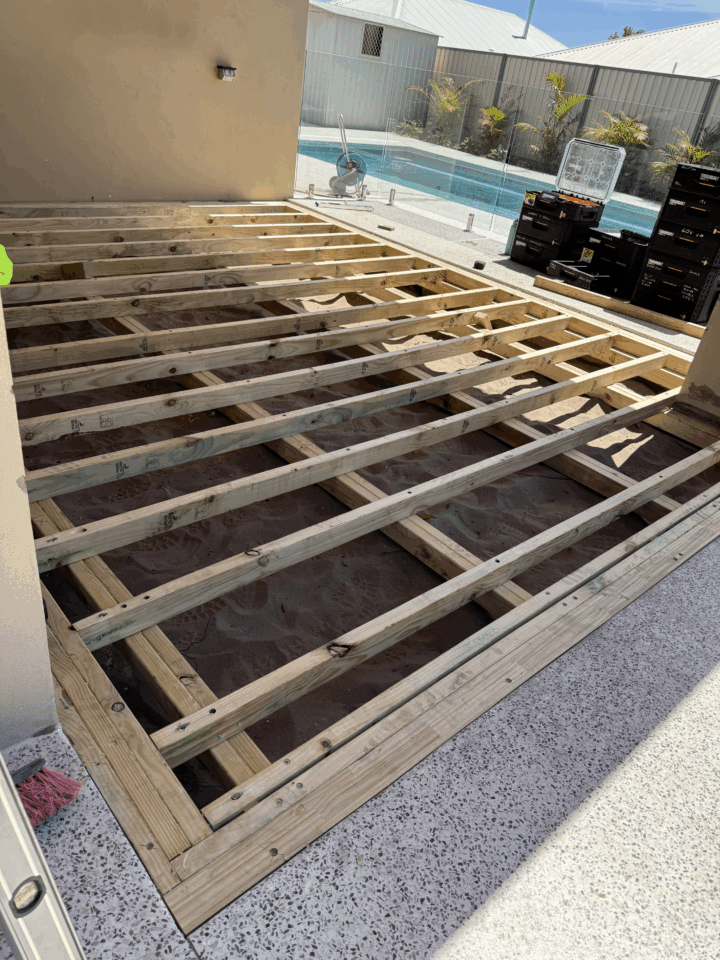
Composite decking boards, while low maintenance and long-lasting, still require a stable, well-ventilated and correctly spaced subframe to perform properly. A poorly built or inappropriate substructure can lead to:
Uneven surfaces or board warping
Excessive movement or bounce underfoot
Premature board damage due to water pooling or poor drainage
Voided product warranties (some suppliers stipulate H3-treated pine subframes for warranty validity)
When installed on treated pine decking frames that follow Australian Standards (AS 1684), composite boards are set up for long-term success.
Why We Use H3 Treated Pine Decking Frames
At Renewscape, our approach aligns with best practice in the building and landscaping industries. All of our composite decks are installed on H3-treated pine subframes unless an alternative is required due to site conditions.
Why H3-treated pine?
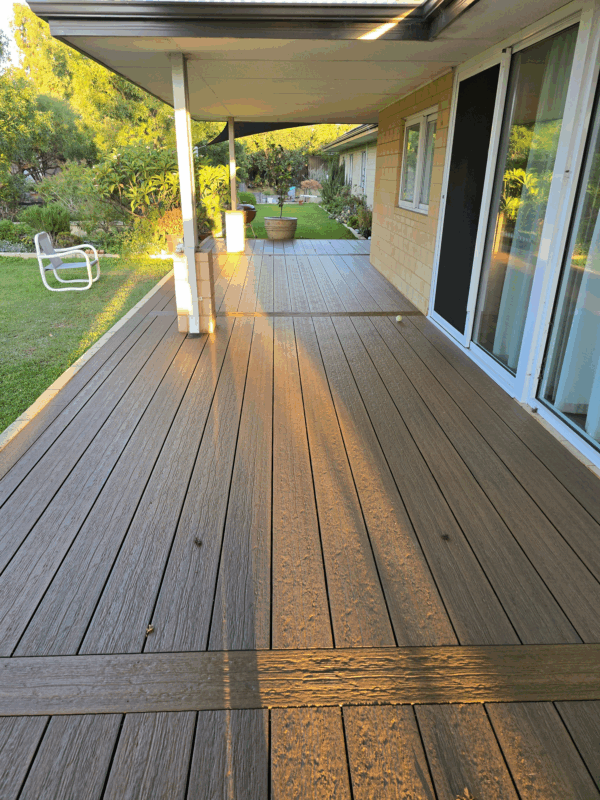
Compliance with Building Codes: Using H3-treated pine ensures the structure meets the National Construction Code (NCC) and product manufacturer requirements.
Adaptability: Pine is easy to cut, shape and adjust on site — perfect for Perth’s mix of sandy soils and sloped blocks.
Compatibility: Composite decking products, such as those from NewTechWood, Eva-Last or Permatimber, are tested and rated for installation over timber frames like H3 pine.
Resilience in Coastal Areas: Areas like Secret Harbour, Shoalwater and Warnbro benefit from timber that’s treated to resist moisture, fungi and termites.
For homeowners in these areas, this approach provides peace of mind, knowing your deck won’t be undermined by shortcuts in framing.
Common Mistakes with Subframe Materials (and What They Cost You)
Unfortunately, we’ve been called in too often to fix failed decks installed by less experienced contractors or DIY efforts. A few common issues we’ve seen include:
Using untreated or low-grade pine framing
Incorrect joist spacing or poor fixing methods
Lack of ventilation beneath the boards
Incompatible materials like redwood or softwood not rated for outdoors
The consequences? Warped or sagging composite boards, moisture damage and costly rework, sometimes within just a year or two of installation.
Using treated pine decking for subframes helps avoid these failures, especially when installed by professionals familiar with manufacturer standards and local conditions.
Steel vs Treated Pine Decking Frames
There’s a lot of talk online about using steel subframes under composite decking. And while steel has its advantages, particularly for commercial builds or termite-prone regions, it’s not always necessary in the Perth metro area.
Comparatively, H3-treated pine is:
More cost-effective for residential applications
Quicker to install, reducing labour costs
Easier to modify during installation or repairs
Readily compatible with clip systems and fasteners from composite decking suppliers
Unless you’re working on a bushfire-prone site or steep slope where steel is recommended, treated pine remains the smartest and most affordable choice for domestic decks.
What About Maintenance?
One misconception about treated pine decking frames is that they require lots of upkeep. In reality, the maintenance burden is minimal when:
The timber is correctly treated (H3 minimum)
The frame is installed with proper ventilation and drainage
Fixings are corrosion-resistant (galvanised or stainless steel)
The subframe is generally concealed, meaning it’s protected from direct sun exposure. Annual checks for moisture build-up, loose fixings or signs of movement are all that’s typically required. A well-built treated pine subframe should last 15–25 years under composite boards.
How to Ensure Your Deck Is Built Right
Here are three simple steps to make sure your composite decking project uses the right subframe:
Ask for H3-treated pine in writing. It should be specified in your quote, contract or scope of work.
Request photos or examples of past work. Seeing how the builder constructs subframes helps you confirm quality.
Check for warranty compliance. Major brands like Eva-Last and NewTechWood require substructures to meet certain standards for their warranties to apply.
Final Thoughts
Choosing the right subframe material isn’t just a technical detail, it’s the foundation of your entire deck. Treated pine decking frames remain the most reliable and compliant option under composite boards, especially in WA’s demanding climate. With the right installation, you’ll enjoy a deck that looks stunning and lasts for decades, without hidden headaches underneath.
If you’re looking for a new deck, advice or product samples, our Port Kennedy showroom is open and ready to help.
